GT Era
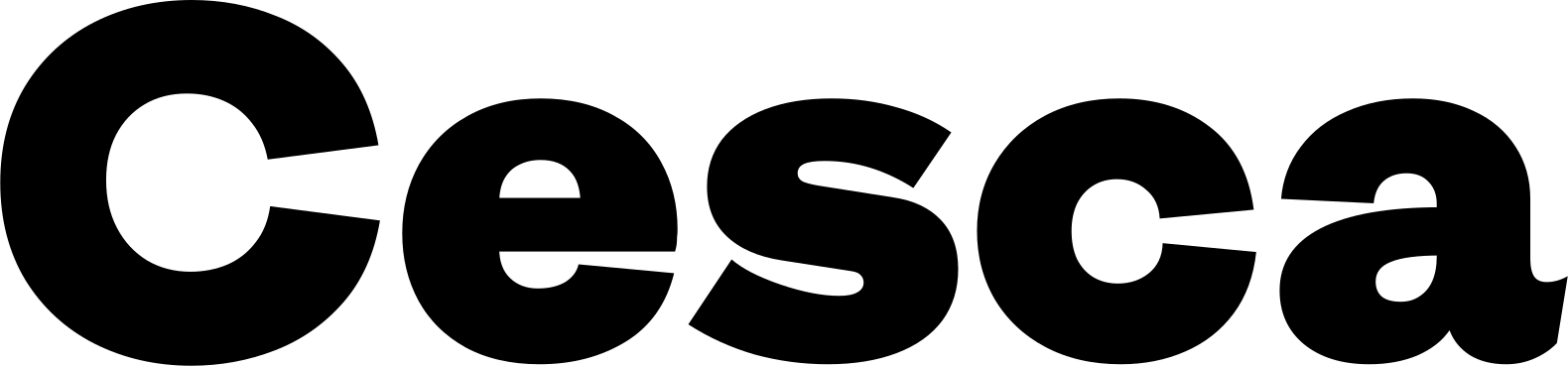
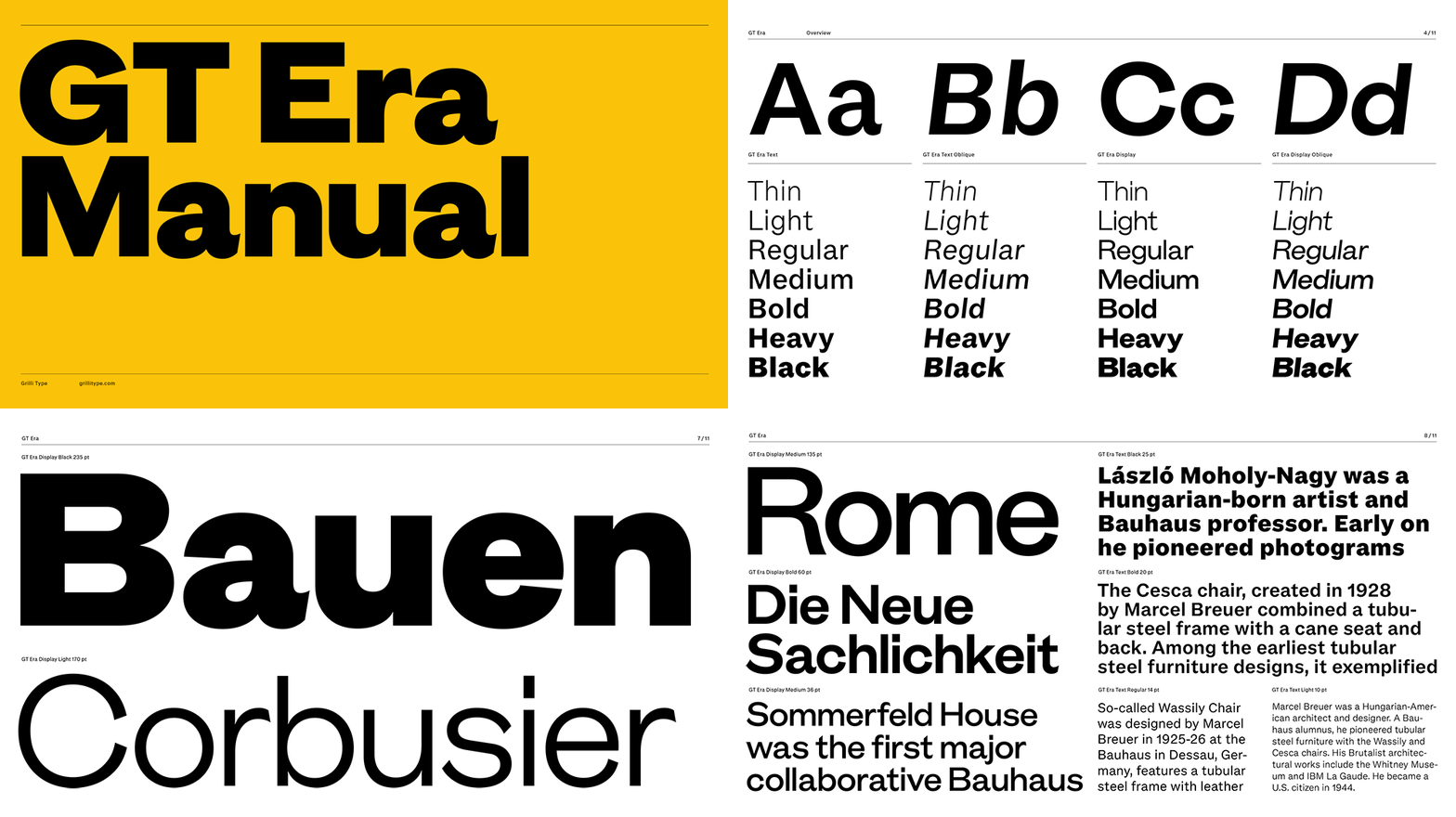
Family overview
- Display
- Thin Oblique
- Light Oblique
- Regular Oblique
- Medium Oblique
- Bold Oblique
- Heavy Oblique
- Black Oblique
- Text
- Thin Oblique
- Light Oblique
- Regular Oblique
- Medium Oblique
- Bold Oblique
- Heavy Oblique
- Black Oblique
Subfamilies
- Display ThinXVI. Der ästhetische Wert eines Kunstwerks ist abhängig vom Grade der Bestimmtheit der ästhetischen Akzente.
- Display Thin ObliqueWe should accept nothing as predetermined, as constituted for eternity. Every firmly established, familiar thing can be shifted about and brought under a new and, primarily, unfamiliar order.
- Display LightThe stronger the aesthetic experience the more completely will the objective, natural appearance of the object of the experience be annihilated.
- Display Light ObliqueThey tested materials for qualities such as color, texture, structure, resistance to wear, flexibility, light refraction and sound absorption.
- Display RegularMoholy-Nagy was the first interwar artist to suggest the use of scientific equipment such as the telescope, microscope, and radiography in the making of art.
- Display Regular ObliqueNot the single piece of work, nor the highest individual attainment must be emphasized, but instead the creation of the commonly usable type, development toward “standards”.
- Display MediumIn 1920, Albers joined the Weimar Bauhaus as a student and became a faculty member in 1922, teaching the principles of handicrafts.
- Display Medium ObliqueOne should not imagine that these relationships are to be taken literally, and, above all, should not believe that they can determine the compositional idea.
- Display BoldThey tested materials for qualities such as color, texture, structure, resistance to wear, flexibility, light refraction and sound absorption.
- Display Bold ObliqueXVI. Der ästhetische Wert eines Kunstwerks ist abhängig vom Grade der Bestimmtheit der ästhetischen Akzente.
- Display HeavyOne should not imagine that these relationships are to be taken literally, and, above all, should not believe that they can determine the compositional idea.
- Display Heavy ObliqueNot the single piece of work, nor the highest individual attainment must be emphasized, but instead the creation of the commonly usable type, development toward “standards”.
- Display BlackEven I was gripped by a kind of timidity bordering on fear when it came to leaving “the world of will and idea”, in which I had lived and worked and in the reality of which I had believed.
- Display Black ObliqueERNST MAY, Mitarbeiter KAUFMANN, Frankfurt am Main, Siedlung Praunheim bei Frankfurt am Main (1926)
- Settings
Typeface information
GT Era reimagines the warmth and idiosyncrasies of early grotesk typefaces for our own era. These pre-modernist tools were being pushed to their extremes in the radical designs of the modernist movements—like Bauhaus and De Stijl—of the period. The typeface shuns neutrality and embraces friction, championing recognition over uniformity and flavor over conformity.
- Designed by Thierry Blancpain with Grilli Type
- Released in 2025
- Available in 28 styles
- GT Era is available for customization and language extensions
- Download the free trial fonts
Typeface features
OpenType features enable smart typography. You can use these features in most Desktop applications, on the web, and in your mobile apps. Each typeface contains different features. Below are the most important features included in GT Era’s fonts:
- SS01
- Alternate g
Painting
Typeface Minisite
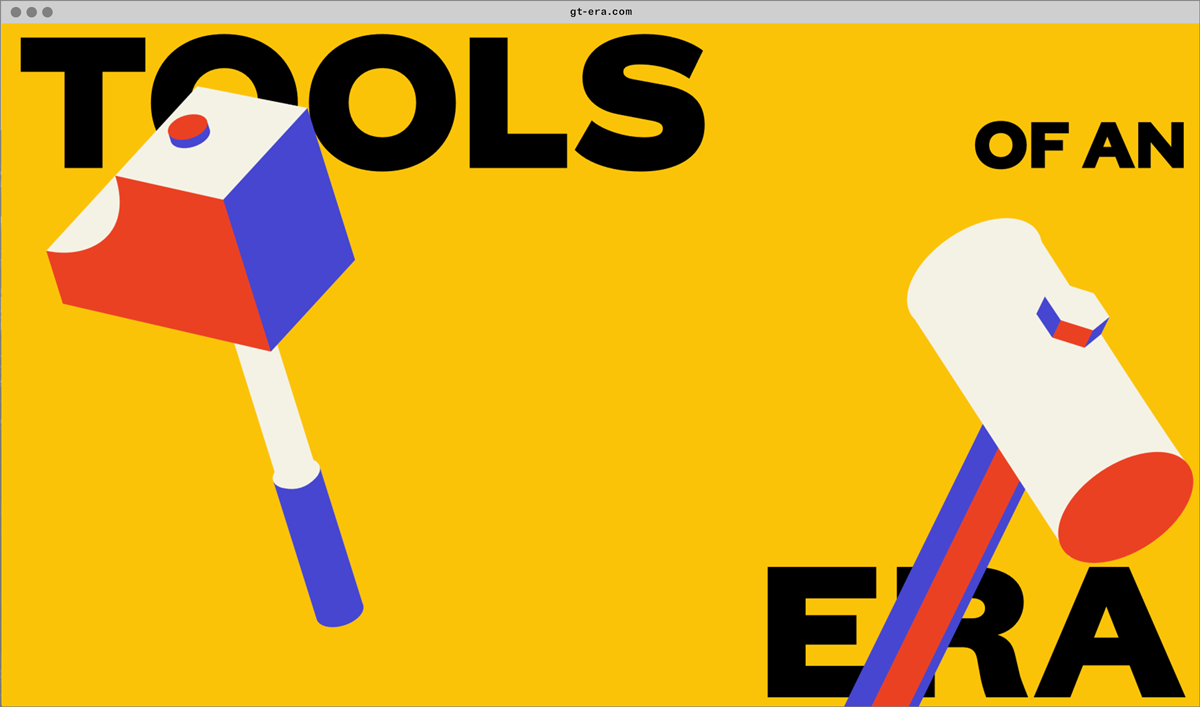
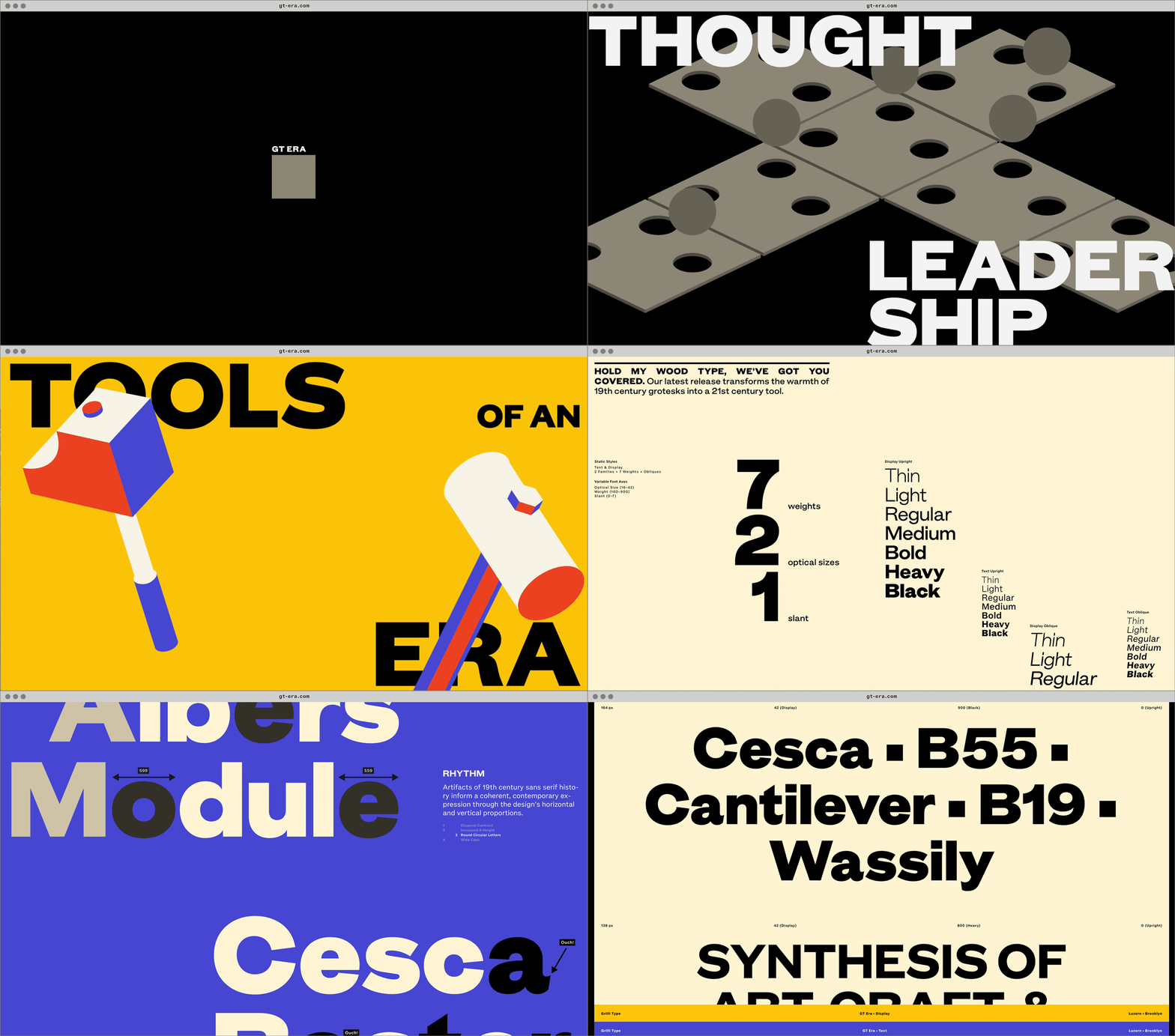
- Visit the GT Era minisite to discover more about the typeface family’s history and design concept.